


|

|

|

|
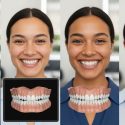
How Does Invisalign Work? Step-by-Step Guide to Clear Aligners in Australia
Introduction
How does Invisalign work? Invisalign uses a series of clear, custom-made aligners that gradually move your teeth into the correct position over time. Each aligner is slightly different, applying controlled pressure to specific teeth until your smile is aligned.
If you’re considering straightening your teeth but want to avoid braces, understanding the Invisalign process is key. In this guide, we’ll walk you through exactly how Invisalign works, the treatment steps involved, what to expect at each stage, and how we deliver this treatment at Alphington Dental Care.
What Is Invisalign and How Does It Straighten Teeth?
Short Answer
Invisalign straightens teeth by applying gentle, controlled pressure through a series of clear aligners that are changed every 1–2 weeks.
How Invisalign Moves Teeth
Each aligner is designed to shift specific teeth slightly. Over time:
- Teeth move in small, planned increments
- Pressure is applied in a controlled sequence
- Bone adapts to support the new position
This process is known as orthodontic tooth movement. According to the Australian Society of Orthodontists’ explanation of how orthodontic treatment works, teeth move when consistent, controlled forces are applied over time, allowing the surrounding bone to remodel safely.
Invisalign Process: Step-by-Step
1. Initial Consultation
Short answer: We assess your teeth and confirm if Invisalign is suitable.
At Alphington Dental Care, we begin with a full consultation where we:
- Examine your teeth and bite
- Discuss your goals
- Take digital scans
2. Digital Scan and Treatment Planning
We use advanced 3D scanning to create a precise model of your teeth.
This allows us to:
- Map out each stage of movement
- Show you a preview of your future smile
- Plan aligner progression
If you want to understand the broader treatment options, you can explore our clear aligners and orthodontic treatments.
3. Custom Aligners Are Created
Your aligners are custom-made based on your treatment plan.
Each set of aligners:
- Is worn for 1–2 weeks
- Moves teeth slightly closer to their final position
- Is replaced by the next set in the series
4. Wearing Your Aligners
How Long Do You Wear Invisalign Each Day?
Short answer: 20–22 hours per day.
Aligners should only be removed for:
- Eating
- Drinking anything other than water
- Brushing and flossing
Consistency is critical for results.
5. Regular Progress Reviews
You’ll visit us every 6–8 weeks so we can:
- Check your progress
- Make adjustments if needed
- Provide your next sets of aligners
Working with an experienced clinician like Dr Claire Wilson ensures your treatment stays on track.
6. Refinements (If Needed)
Some patients may need additional aligners to fine-tune their results.
This is normal and helps achieve the best possible outcome.
7. Retainers After Treatment
Once your teeth are aligned:
- You’ll wear retainers
- This prevents teeth from shifting back
Retention is a crucial part of any orthodontic treatment.
How Invisalign Aligners Are Designed
Short Answer
Each aligner is digitally designed to move specific teeth at specific times.
What Makes Invisalign Different?
Unlike braces, Invisalign uses:
- Digital planning instead of manual adjustments
- Removable aligners instead of fixed brackets
- Gradual staged movement
Clinical research published in the American Journal of Orthodontics and Dentofacial Orthopedics shows that aligners can effectively move teeth when treatment is properly planned and monitored.
How Long Does Invisalign Take?
Short Answer
Most treatments take between 6 and 18 months.
Typical Treatment Timeline
- Minor corrections: 3–6 months
- Moderate cases: 6–12 months
- Complex cases: 12–24 months
Your timeline depends on how much movement is required.
Does Invisalign Hurt?
Short Answer
You may feel mild pressure, especially when switching aligners.
What Patients Experience
- Slight tightness for the first 1–2 days
- No wires or brackets causing irritation
- Gradual, controlled movement
Most patients find Invisalign more comfortable than braces.
What Can Invisalign Fix?
Short Answer
Invisalign can treat many common orthodontic issues.
Common Problems Invisalign Treats
- Crowded teeth
- Gaps between teeth
- Overbite
- Underbite
- Crossbite
However, very complex cases may still require braces.
Invisalign vs Braces: How Do They Work Differently?
Key Differences
| Feature | Invisalign | Braces |
| Type | Removable aligners | Fixed brackets |
| Visibility | Nearly invisible | Visible |
| Cleaning | Easy | More difficult |
| Adjustments | Digital | Manual |
Both systems use controlled force, but Invisalign relies on pre-planned aligner stages rather than wire adjustments.
Daily Life with Invisalign
Eating
- Remove aligners before eating
- No food restrictions
Cleaning
- Brush teeth before putting aligners back in
- Clean aligners daily
According to Better Health Channel’s guidance on oral hygiene, maintaining good oral hygiene is essential during orthodontic treatment to prevent plaque and gum issues.
Talking
- Slight adjustment period
- Most patients adapt quickly
What Happens If You Don’t Wear Aligners Enough?
Short Answer
Treatment may slow down or become less effective.
Potential Issues
- Teeth don’t move as planned
- Aligners may not fit properly
- Treatment time increases
Consistency is one of the biggest factors in Invisalign success.
Quick Answers About How Invisalign Works
How does Invisalign move teeth?
By applying gentle pressure through a series of custom aligners that are changed regularly.
How often do you change aligners?
Usually every 1–2 weeks.
Do you sleep with Invisalign?
Yes, aligners should be worn overnight.
How long each day should you wear Invisalign?
20–22 hours per day.
Can Invisalign fix all cases?
It can treat many cases, but some complex issues may need braces.
Why Choose Alphington Dental Care for Invisalign?
At Alphington Dental Care, we focus on:
- Personalised treatment planning
- Advanced digital scanning
- Clear communication at every step
- Ongoing support throughout treatment
We guide you through the entire Invisalign process so you feel confident from day one.
Conclusion
So, how does Invisalign work? It uses a series of custom aligners to gradually and precisely move your teeth into alignment through controlled pressure and careful planning.
The process is simple, but the results depend on consistency, planning, and proper guidance.
If you’re considering Invisalign, the best next step is a consultation.
You can contact our team to book an appointment and find out if Invisalign is right for you.

